The strength of this image lies precisely in its ambiguity. One cup of coffee has already been consumed, while the other remains untouched. Together, they do not tell a single, unequivocal story; rather, they open a field of possible interpretations.
In a café located on the outskirts of Berlin, the untouched cup may evoke several states of being.
Waiting. Someone is late—perhaps they will never arrive. The second cup becomes the measure of suspended time.
Absence. The expected person existed only as a possibility. The full cup becomes the portrait of someone who is no longer there.
Disquiet. The one who remained has lost the desire to drink. The atmosphere is charged with tension, the aftermath of a difficult encounter or an irrevocable separation.
Ordinariness. There need not be any drama. Someone may simply have stepped outside for a cigarette, gone to the restroom, or answered a phone call. The ordinary, too, possesses its own language.
Memory. The untouched cup may belong to someone who is no longer alive. It is an absence made visible through the quiet presence of an everyday object.
From an artistic perspective, I find the reading of waiting the most compelling. Waiting is a universal human condition, yet in the periphery of Berlin it also acquires a social and existential dimension: waiting for employment, for official papers, for a loved one, for change itself. The untouched cup thus becomes a minimal sign that speaks of a far larger narrative. Ultimately, the subject of the work is not the coffee itself, but time brought to a standstill before that untouched cup. It is precisely this void that draws the viewer in, inviting each observer to complete the narrative through the lens of their own experience.
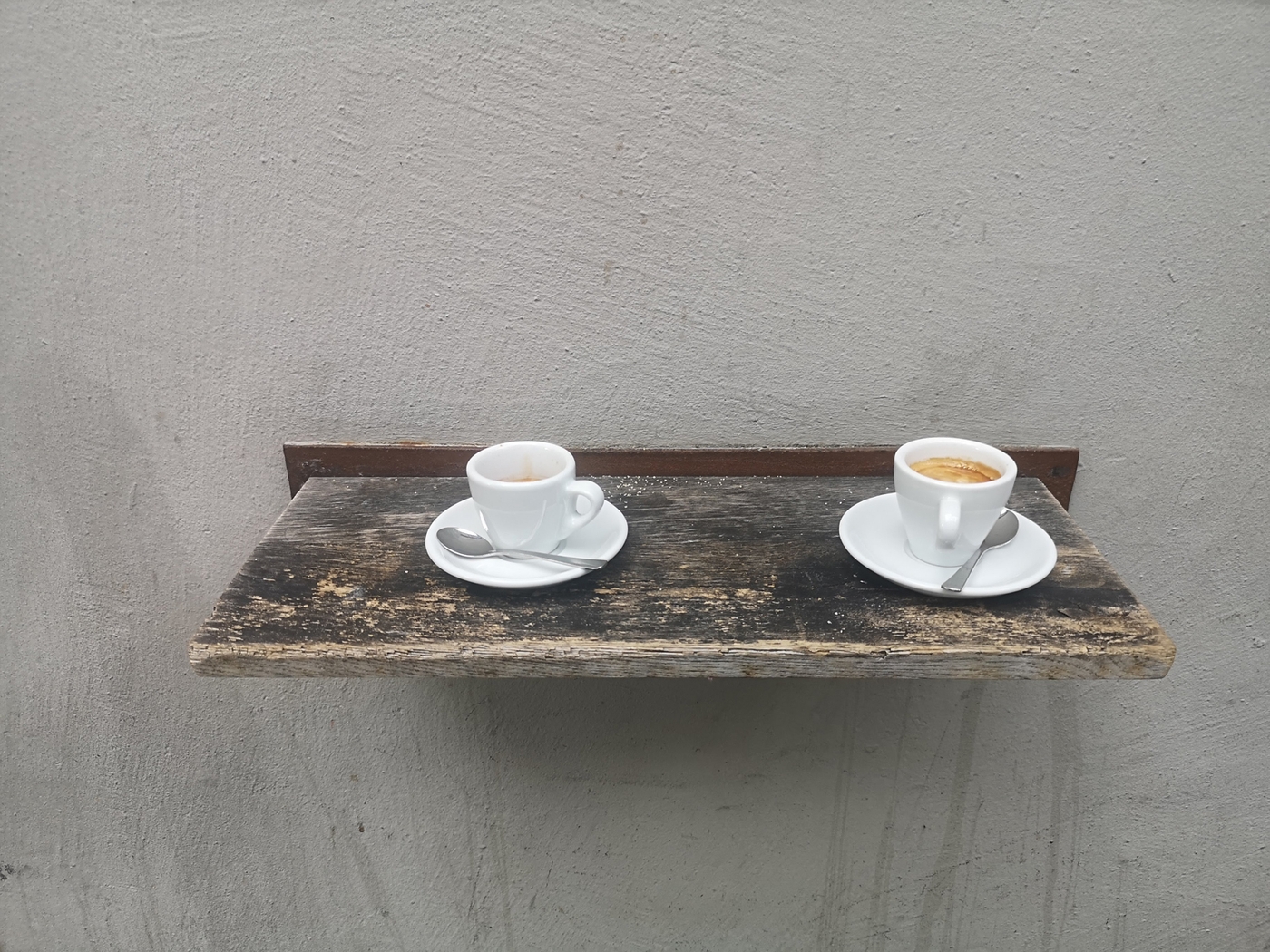
The strength of this image lies precisely in its ambiguity. One cup of coffee has already been consumed, while the other remains untouched. Together, they do not tell a single, unequivocal story; rather, they open a field of possible interpretations.
In a café located on the outskirts of Berlin, the untouched cup may evoke several states of being.
Waiting. Someone is late—perhaps they will never arrive. The second cup becomes the measure of suspended time.
Absence. The expected person existed only as a possibility. The full cup becomes the portrait of someone who is no longer there.
Disquiet. The one who remained has lost the desire to drink. The atmosphere is charged with tension, the aftermath of a difficult encounter or an irrevocable separation.
Ordinariness. There need not be any drama. Someone may simply have stepped outside for a cigarette, gone to the restroom, or answered a phone call. The ordinary, too, possesses its own language.
Memory. The untouched cup may belong to someone who is no longer alive. It is an absence made visible through the quiet presence of an everyday object.
From an artistic perspective, I find the reading of waiting the most compelling. Waiting is a universal human condition, yet in the periphery of Berlin it also acquires a social and existential dimension: waiting for employment, for official papers, for a loved one, for change itself. The untouched cup thus becomes a minimal sign that speaks of a far larger narrative. Ultimately, the subject of the work is not the coffee itself, but time brought to a standstill before that untouched cup. It is precisely this void that draws the viewer in, inviting each observer to complete the narrative through the lens of their own experience.


Contatti
nopavilion@gmail.com